
A national frontier can be a quiet stretch of farmland or one of the most closely monitored places on Earth. Along politically sensitive boundaries, governments combine border guards, cameras, patrol roads, controlled crossing points, electronic monitoring and, in some locations, large military deployments. Physical barriers are only the most visible part of that system. The broader security structure may include air surveillance, intelligence cooperation and special procedures for legitimate trade and travel.
Border protection is shaped by history as much as technology. The Korean peninsula remains divided by an armistice; the India–Pakistan frontier includes both an internationally recognized boundary and a disputed Line of Control; and European countries have reinforced particular crossing routes following sharp changes in migration and security conditions. Not all heavily monitored lines are legally recognized international borders. A ceasefire line or disputed frontier must be described accurately rather than silently treated as a settled boundary. Nor can fencing length alone establish which border is the ‘most guarded’: deployment levels and military capabilities are not consistently disclosed.
Now let’s check out the top 10 most heavily guarded borders in the world.
1. Korean Demilitarized Zone — North Korea and South Korea
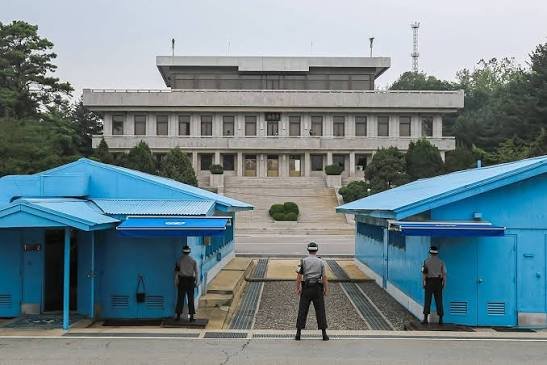
The approximately 250-kilometer Korean Demilitarized Zone emerged from the 1953 armistice that ended major Korean War fighting. Despite its name, heavily armed forces and advanced observation networks lie on opposing sides. Fences, military posts and restrictions on movement make the surrounding area exceptionally sensitive.
The Military Demarcation Line is an armistice boundary, not an internationally agreed peace-treaty border. The distinctive risk is military escalation: even a small incident can carry consequences far beyond unauthorized civilian crossing.
2. India–Pakistan Frontier and Line of Control
India and Pakistan maintain substantial security deployments along their frontier. The international border includes fenced stretches and patrol infrastructure; the Line of Control in Kashmir is a separately defined military control line in disputed territory. Treating the two as legally identical would obscure the region’s history.
India’s Home Ministry reported in December 2025 that roughly 93% of the 2,289.66-kilometer international-border segment covered by its fencing figures had a physical fence. Security management also involves observation posts and electronic monitoring. The broader challenge is deterring infiltration and cross-border crime while preventing military escalation.
3. United States–Mexico Border
The roughly 3,100-kilometer U.S.–Mexico border runs through cities, desert, mountains and waterways. U.S. Customs and Border Protection combines personnel, checkpoints, physical barriers and surveillance technology. Equipment differs by geography and operational need; the entire border is not fenced in one continuous wall.
The security agenda includes unauthorized crossings, trafficking, search-and-rescue operations and the handling of lawful commercial movement. Its scale makes technology especially important, but geographic remoteness and humanitarian responsibilities complicate enforcement.
4. Poland–Belarus Border
Poland has substantially strengthened its frontier with Belarus through barriers, electronic observation and expanded security operations. Its Interior Ministry reported in 2025 that a roughly 186-kilometer land barrier had been reinforced and a 206-kilometer electronic barrier upgraded. Additional coverage protects river sections.
Polish officials cite migration pressure and security concerns as central reasons for these measures. The same border has generated intense debate over asylum access, treatment of migrants and the responsibilities of European governments under international law.
5. Türkiye–Syria Border
Türkiye’s approximately 910-kilometer boundary with Syria has been fortified over years of civil war, displacement and cross-border security threats. Turkish authorities have publicized border-wall projects, surveillance towers, lighting and patrol roads in different sectors.
The frontier matters because it connects a major NATO member with a state affected by prolonged armed conflict. Military considerations, humanitarian movements and legal commercial crossings must all be managed, often in rapidly changing conditions. Operational arrangements may vary substantially along the line.
6. India–Bangladesh Border
At approximately 4,096.7 kilometers, the India–Bangladesh boundary is one of the world’s longest complex land frontiers. It cuts across rivers, villages, farmland and difficult terrain. India’s Home Ministry stated in December 2025 that around 3,239.92 kilometers had been fenced, with remaining sections constrained partly by geography and practical obstacles.
Border Security Force personnel work alongside Bangladesh’s Border Guard through coordination mechanisms. The central issues include smuggling, trafficking, unauthorized crossings and the everyday needs of families living near the boundary. Riverine stretches require solutions different from those used on dry land.
7. Israel–Egypt Border
Israel’s frontier with Egypt crosses much of the Sinai desert. Israel constructed a substantial security fence, complemented by monitoring and patrol infrastructure, as concerns grew over infiltration, smuggling and militant violence. Remote terrain makes observation and rapid response important.
The border is also a product of the 1979 Egypt–Israel peace treaty. Its modern security structure illustrates a distinction often lost in border discussions: a heavily guarded frontier can exist between states that have a formal peace agreement.
8. Saudi Arabia–Iraq Border
The Saudi–Iraqi frontier runs for approximately 800 kilometers through sparsely populated desert. Saudi Arabia developed layered border security systems after threats associated with militant violence and instability in neighboring Iraq. Fencing, patrol facilities and surveillance are important features.
The environment itself presents major operational challenges: long distances, harsh weather and limited settlements complicate supervision. The border is significant not because of constant visible clashes but because governments have invested heavily in preventing transnational security threats.
9. Spain–Morocco Frontiers at Ceuta and Melilla
Ceuta and Melilla are Spanish territories on the North African coast. Their land frontiers with Morocco are short compared with continental boundaries, yet have extensive perimeter barriers and monitored crossing facilities. They also form external European Union borders on the African continent.
Border operations attract scrutiny because of the interaction between physical fencing, migration routes, humanitarian obligations and the legal status of people seeking protection. These enclaves demonstrate that a border’s security intensity is not determined solely by length.
10. Cyprus United Nations Buffer Zone
Cyprus is divided by ceasefire lines separated by a United Nations buffer zone of about 180 kilometers. The UN Peacekeeping Force in Cyprus monitors the area through observation and patrols, helping maintain the status quo between opposing sides.
This is not an ordinary, mutually settled international boundary. Its guarded character reflects the island’s unresolved political division. UN monitoring differs substantially from a country’s armed border-enforcement system, but the restrictions on movement and sensitivity of crossing arrangements are significant.
What Makes a Border Heavily Guarded?
Military confrontation, trafficking risks, geography and migration pressure can all shape investment in security. Technology extends observation, but it cannot eliminate political disagreement or replace lawful border procedures. Comparisons should distinguish the number of guards from the strength of barriers, and security goals from the rights of civilians. Permanent stability ultimately requires diplomacy and predictable rules alongside infrastructure.
Conclusion
The world’s closely monitored frontiers show how security, sovereignty and human movement intersect. Their physical defenses matter, but the political relationships on either side often determine the real level of risk.