
No, it is generally not illegal for an individual in the United States to personally boycott Israel. A private consumer can usually decide not to purchase Israeli products, avoid businesses connected with Israel or publicly support the Boycott, Divestment and Sanctions movement.
However, more than 30 states have enacted laws, executive orders or investment policies opposing boycotts of Israel. These measures usually do not make personal participation in a boycott a criminal offence. Instead, they may prevent certain companies from receiving state contracts or require public pension funds to avoid investing in businesses that boycott Israel.
The precise rules differ considerably between states.
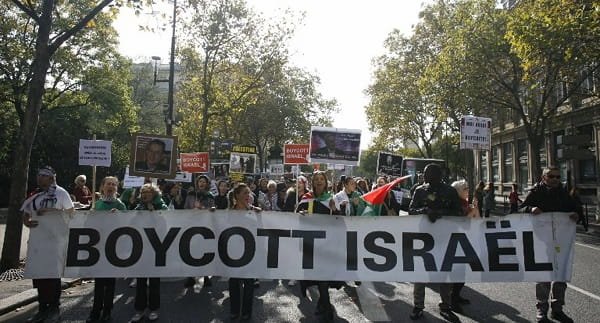
What Do State Anti-Boycott Laws Prohibit?
Most state anti-BDS laws focus on government spending rather than ordinary consumer choices. A state may require a company seeking a public contract to verify that it is not currently boycotting Israel and will not do so during the contract.
Other states maintain lists of companies considered to be boycotting Israel. State pension funds and public agencies may be required to divest from listed companies or avoid making new investments in them.
These laws generally define a boycott as refusing to deal with Israel, Israeli businesses or companies operating in Israel for the purpose of limiting commercial relations.
The measures do not normally prohibit people from criticising the Israeli government, supporting Palestinian rights, attending demonstrations or encouraging others to join a boycott. The restrictions are usually connected to eligibility for government contracts or state investments.
Can an Individual Refuse to Buy Israeli Products?
A private individual can generally refuse to purchase goods from Israel. No state broadly criminalises a person for checking a product label and choosing a different product because of political beliefs.
A person may also express support for a boycott through speeches, signs, online posts and peaceful demonstrations. Political expression receives substantial protection under the First Amendment.
In NAACP v. Claiborne Hardware Co., the U.S. Supreme Court recognised constitutional protection for important elements of a politically motivated consumer boycott. The case involved a civil-rights boycott of white-owned businesses in Mississippi. The Court protected peaceful advocacy, association and political expression connected with the campaign.
However, this protection does not cover violence, threats, property damage, trespassing or unlawful harassment. Those actions can be punished regardless of the political purpose behind them.
How Do the Laws Affect State Contractors?
The greatest legal risk generally applies to businesses seeking state or local government contracts.
Texas law, for example, applies its Israel-boycott contract requirement only to certain contracts involving companies with at least 10 full-time employees and a value of at least $100,000 in public funds. The company must verify that it does not boycott Israel and will not begin doing so during the contract.
Other states use different financial limits, definitions and exemptions. Some earlier laws applied broadly enough to affect sole proprietors such as teachers, lawyers, journalists or independent speakers. After constitutional challenges, several states amended their laws to limit them to larger companies or higher-value contracts.
Therefore, someone who performs paid work for a state university, public school, city or other government agency should examine the particular contract and state statute before signing.
Are Anti-BDS Laws Constitutional?
The constitutional issue remains disputed.
Supporters argue that states are entitled to decide how public money is spent and may refuse to contract with companies engaged in discriminatory commercial conduct. Critics argue that requiring contractors to promise not to participate in a political boycott penalises protected expression and forces them to affirm a government-approved position.
In 2022, the full U.S. Court of Appeals for the Eighth Circuit upheld Arkansas’s anti-boycott contracting law. The majority concluded that the law regulated commercial purchasing decisions rather than protected speech. It also found that the required certification did not amount to unconstitutional compelled speech.
The U.S. Supreme Court declined to hear an appeal in February 2023. That left the Eighth Circuit decision in effect, but a denial of review does not mean the Supreme Court approved the decision or resolved the issue nationwide.
Other legal challenges have produced injunctions, amendments, dismissals and procedural rulings. As a result, the validity and reach of a particular restriction may depend on its wording and the federal judicial circuit where the state is located.
Does Federal Anti-Boycott Law Make BDS Illegal?
Federal anti-boycott regulations are different from state anti-BDS laws.
The federal rules mainly prevent U.S. companies from participating in certain boycotts imposed by foreign governments that the United States does not support. They can apply when a business receives a foreign request to avoid Israel, provide information about relationships with Israeli companies or include prohibited boycott conditions in commercial documents.
These federal rules do not generally make an American consumer’s independently chosen political boycott a crime.
The Practical Legal Position
Boycotting Israel is therefore not broadly illegal across U.S. states. Individuals normally remain free to make personal purchasing decisions and peacefully express political opinions.
The restrictions mainly affect companies seeking government contracts, businesses receiving public investments and entities covered by specific state funding rules. Anyone facing an anti-boycott clause should check the current statute in that state because the requirements, exemptions and constitutional status can change.