
Delta-8 THC is no longer treated in Ohio as an ordinary unrestricted hemp product in the way it commonly was before 2026. Major changes made by Senate Bill 56 took effect on March 20, 2026, significantly narrowing which cannabinoid products can qualify as legal hemp.
Under the new law, Ohio excludes certain synthesized cannabinoids and intoxicating cannabinoid products from its definition of hemp. A final hemp-derived cannabinoid product also cannot contain more than 0.4 milligram of combined total THC per container if it is to remain within the state’s hemp definition.
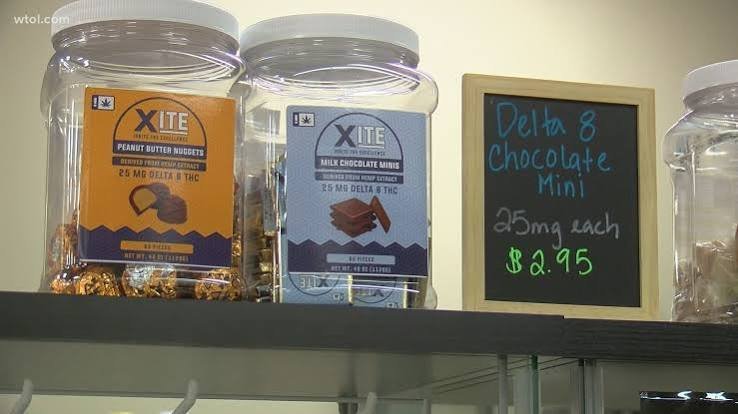
As a result, many Delta-8 gummies, vapes, tinctures and other intoxicating products that were previously sold in smoke shops or online as hemp products no longer qualify as ordinary hemp under Ohio law.
What Changed for Delta-8 in Ohio in 2026?
Before the 2026 changes, Ohio’s hemp law primarily relied on the familiar federal-style limit of 0.3% Delta-9 THC on a dry-weight basis. This allowed a large market for products containing cannabinoids such as Delta-8 THC that were derived or manufactured from federally lawful hemp.
Senate Bill 56 changed that approach.
Ohio’s new definition of hemp specifically excludes products containing cannabinoids that:
- Cannot naturally be produced by the cannabis plant
- Can occur naturally but were synthesized or manufactured outside the plant
- Exceed the state’s permitted combined THC limits
For final hemp-derived cannabinoid products sold to consumers, the law sets a maximum of 0.4 milligram of combined total THC per container. The calculation can include THC, THCA and other cannabinoids identified as having or being marketed as having THC-like effects.
This change directly affects the way many commercial Delta-8 products are made and sold.
Why Does the New Rule Affect Delta-8 THC?
Delta-8 THC can occur naturally in cannabis, but usually only in very small amounts.
Commercial Delta-8 products are commonly produced by chemically converting hemp-derived CBD into Delta-8 THC rather than extracting naturally occurring Delta-8 directly from the plant in meaningful quantities.
Ohio’s new law specifically excludes from the hemp definition cannabinoids that are capable of occurring naturally but have been synthesized or manufactured outside the cannabis plant.
Therefore, simply labeling a product as “hemp-derived Delta-8” no longer means it qualifies as an ordinary hemp product in Ohio.
Can You Still Buy Delta-8 at Gas Stations or Smoke Shops in Ohio?
Consumers should not assume that intoxicating Delta-8 products sold at convenience stores, smoke shops or other general retailers are lawful hemp products under Ohio’s current rules.
A typical Delta-8 gummy, cartridge or tincture containing intoxicating amounts of THC would generally have difficulty satisfying Ohio’s extremely low 0.4 milligram combined THC per container hemp threshold.
Products containing synthesized or converted cannabinoids may also fall outside the hemp definition regardless of the old 0.3% Delta-9 dry-weight standard.
This is one of the biggest differences between Ohio’s current law and the rules consumers may remember from previous years.
Does the 0.3% THC Hemp Rule Still Apply?
Yes, but it is no longer the only test.
Ohio still defines hemp partly as Cannabis sativa L. containing no more than 0.3% total tetrahydrocannabinols on a dry-weight basis, including THCA.
However, Ohio now imposes additional restrictions on intermediate and final hemp-derived cannabinoid products.
For a final consumer product, simply remaining below 0.3% THC by weight does not automatically make it legal hemp if it:
- Contains prohibited synthesized cannabinoids, or
- Contains more than 0.4 milligram combined total THC per container
That means an edible could theoretically remain below 0.3% THC by weight yet still fail Ohio’s new product-level limit.
Is Delta-8 the Same as Legal Recreational Marijuana in Ohio?
No. The legal categories are different.
Ohio separately allows adult-use marijuana for people age 21 and older through its regulated cannabis system. Adult-use marijuana may legally be sold in approved forms such as:
- Edibles
- Extracts
- Vape products
- Beverages
- Tinctures
- Capsules
- Lozenges
- Pre-rolls
- Cannabis flower
These products are distributed through Ohio’s regulated marijuana system rather than being sold as ordinary retail hemp products.
Therefore, the fact that recreational marijuana is legal in Ohio does not mean any Delta-8 product from any retailer is automatically legal.
How Old Do You Have to Be to Buy Intoxicating THC Products in Ohio?
Ohio’s legal adult-use marijuana system is limited to people 21 years of age or older.
An adult-use consumer is defined by Ohio law as an individual who is at least 21. Adults who obtain marijuana from a licensed dispensary may legally use and possess it subject to state limits and other restrictions.
The 2026 hemp changes were designed in part to prevent intoxicating cannabinoid products from remaining broadly available outside the regulated marijuana framework simply because they originated from hemp.
Can You Drive After Using Delta-8 THC?
No one should drive while impaired by Delta-8 or another intoxicating cannabinoid.
Delta-8 THC can produce psychoactive effects, and Ohio’s marijuana rules do not authorize anyone to operate a motor vehicle while under the influence of marijuana. The same practical concern applies to any THC product capable of impairing judgment, coordination or reaction time.
A product being purchased legally does not make impaired driving legal.
Can Employers Restrict Delta-8 Use?
Yes. Employees should not assume that using a hemp-labeled or THC product protects them from workplace consequences.
Employers may maintain drug-free workplace policies, and cannabis products can create problems in workplace drug testing. Standard THC tests may not reliably distinguish between Delta-8 THC, Delta-9 THC and metabolites resulting from different cannabis products.
Workers in transportation, safety-sensitive jobs or federally regulated positions should be particularly cautious.
Is Delta-8 Federally Legal?
Federal hemp law and Ohio law are separate issues.
Even where a product may arguably meet a federal definition of hemp, states can impose their own restrictions on the manufacture, sale and classification of cannabinoid products.
Ohio exercised that authority through Senate Bill 56. The law took effect on March 20, 2026 and substantially tightened the state’s rules for intoxicating hemp-derived cannabinoids.
Consumers therefore should not rely solely on claims that Delta-8 is “federally legal” when determining whether a particular product complies with Ohio law.
Final Word
Delta-8 THC is heavily restricted in Ohio in 2026 and typical intoxicating Delta-8 products can no longer simply be treated as ordinary legal hemp.
Since March 20, 2026, Ohio’s revised hemp law excludes certain synthesized cannabinoids and limits final hemp-derived cannabinoid products to no more than 0.4 milligram of combined total THC per container. These rules mean many Delta-8 gummies, vapes and similar products that were previously sold under the hemp label no longer fit Ohio’s legal definition of hemp.
Adults 21 and older still have access to legal THC products through Ohio’s regulated adult-use marijuana system. For consumers, the safest approach is to distinguish licensed marijuana products from unregulated products marketed simply as “Delta-8” or “hemp-derived THC.”