
A pedestrian struck by a car, delivery van or truck has little protection against a moving vehicle. The resulting claim may involve emergency surgery, rehabilitation, loss of independence, an inability to work and long-term medical needs. Yet responsibility is not determined simply by the fact that someone was walking. Ohio’s crosswalk rules distinguish marked and unmarked crossings, and the duties of motorists and pedestrians depend on signals, roadway conditions and where the person entered the road. Evidence such as traffic-camera footage, vehicle data, witness accounts and intersection measurements may disappear quickly. The five attorneys below practice at separate Ohio firms with personal-injury or pedestrian-related experience. The selections offer a researched comparison, not an official ranking or an assurance that the same strategy will work for every collision.
How the attorneys were selected
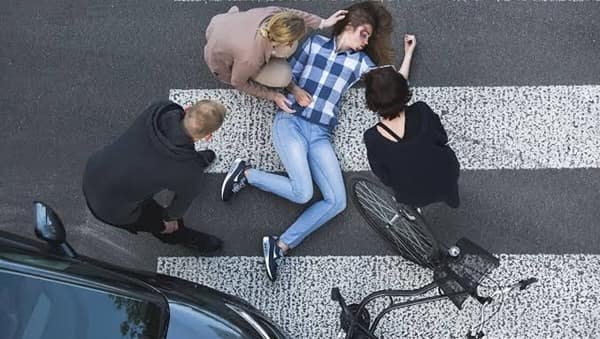
The shortlist considers documented injury representation, pedestrian or road-user case information, litigation experience, individual professional biographies and verifiable contact details. Firms are distinct, attorneys are alphabetical, and no recovery is presented as an average. This is a November 2026 research shortlist rather than a certified statewide ranking. Current Ohio registration, disciplinary history, case acceptance and the assigned trial lawyer should be independently confirmed before retaining counsel.
| Attorney name | Current firm | Ohio office city | Roadway and pedestrian injury work |
| Charles E. Boyk | Charles E. Boyk Law Offices LLC | Toledo | Roadway crashes, serious injury and wrongful death |
| Gary L. Himmel | Amourgis & Associates (of counsel) | Fairlawn | Pedestrian collisions and injury trials |
| Gary W. Kisling | Kisling, Nestico & Redick LLC | Fairlawn | Pedestrian and vehicle injury litigation |
| Scott M. Kuboff | Lowe Trial Lawyers | Cleveland | Pedestrian and cyclist roadway injuries |
| Jami S. Oliver | Oliver Law Office | Dublin | Pedestrian fatalities and serious injury litigation |
1. Charles E. Boyk
Charles E. Boyk founded his northwest Ohio personal-injury practice after his admission to the Ohio bar in 1983. His official biography documents work representing people injured in car, truck and motorcycle crashes, as well as wrongful-death and other serious negligence matters. Those areas intersect with pedestrian collisions because the investigation often depends on driver conduct, vehicle movement and the medical consequences of a high-force impact. His firm lists several northwest Ohio offices, including a downtown Toledo meeting location. The office description indicates that visits to this location are by appointment, so clients should arrange meetings before traveling.
Boyk earned his law degree at the University of Toledo and has served as counsel or co-counsel in civil cases outside Ohio. Published professional sources list recognition from Best Lawyers and Super Lawyers. A pedestrian client should not infer a record of pedestrian-specific verdicts from general accident work; instead, the consultation should establish what comparable roadway claims the proposed lawyer has personally handled. Ask whether a reconstruction specialist is necessary, how witness statements will be secured and whether the case could involve a commercial driver or governmental road-design questions. Early evidence preservation can be more important than the size of a settlement advertised elsewhere.
Office: 405 Madison Avenue, Suite 1200, Toledo, OH 43604 (by appointment). Telephone: 419-241-1395. Official website: charlesboyk-law.com.
2. Gary L. Himmel
Gary L. Himmel is a personal-injury lawyer based in the Akron area whose published practice materials expressly list pedestrian accidents. His professional site describes more than thirty-five years of injury work and extensive experience preparing cases for trial. It identifies him as of counsel to Amourgis & Associates, an important distinction from the name of his separately branded website. His practice information also includes car and truck collisions, falls and claims involving negligent conduct. That broad injury background can be relevant when a pedestrian case requires reconstruction of the crash or proof that a disputed medical condition resulted from the collision.
A pedestrian accident can involve several competing accounts: where the person was walking, whether traffic signals were operating, whether the vehicle was turning and whether the driver had an unobstructed view. Himmel’s identified pedestrian work provides a basis for asking how he investigates those details before negotiating with an insurer. Clients should confirm his present role at the firm, which attorney will sign pleadings and attend hearings, and how outside experts are chosen. His own practice website identifies a Fairlawn location and a direct intake telephone number; the engagement letter should identify the legal entity responsible for the representation.
Office: 3200 West Market Street, Suite 106, Fairlawn, OH 44333. Telephone: 833-427-9669. Official website: garyhimmel.com.
3. Gary W. Kisling
Gary W. Kisling is a founder of Kisling, Nestico & Redick and now serves in an of-counsel role. His firm biography records more than four decades of personal-injury practice and a background that began with judicial-assistant work in Akron trial courts. A published individual practice listing specifically identifies pedestrian accidents alongside car, truck and other injury claims. That combination may be useful in understanding the difference between a simple insurance dispute and a case requiring testimony about driver perception, stopping distance, road geometry and long-term medical losses.
Kisling’s official biography also lists representative Ohio appellate cases involving civil injury or liability questions. His litigation experience should be evaluated against the specific facts of a new pedestrian crash, not treated as proof that every road-user case requires a jury trial. KNR is a multi-office law firm and the official website identifies Kisling as of counsel, so clients should ask who will act as primary lawyer, who will investigate the crash and who will appear at trial if needed. In a case involving a seriously injured pedestrian, an early decision about obtaining traffic video and preserving vehicle evidence can materially affect the proof.
Office: 3412 West Market Street, Fairlawn, OH 44333. Telephone: 330-869-9007. Official website: knrlegal.com.
4. Scott M. Kuboff
Scott M. Kuboff is a partner at Lowe Trial Lawyers in the Cleveland area. His firm biography specifically describes advocacy for cyclists and pedestrians hurt on Ohio roads, distinguishing his practice from a general automobile-accident listing. He regularly speaks about bicycle and pedestrian law to lawyers and local cycling or multisport organizations. Kuboff earned his law degree at Cleveland-Marshall College of Law in 2007 and handles personal-injury, product-liability and wrongful-death matters. His road-user focus can be pertinent to collisions at intersections, in marked crosswalks or where drivers dispute whether a pedestrian was visible.
His professional biography records leadership in the Cleveland Academy of Trial Attorneys and Super Lawyers recognition through 2026. A claimant should ask how Kuboff approaches intersections that have no painted crossing lines but may still contain an unmarked crosswalk under Ohio law. Other useful questions concern obtaining traffic-signal timing records, determining whether cellphone activity can be shown legally and evaluating a driver’s claim that a pedestrian suddenly entered the roadway. His professional involvement with pedestrian safety offers a concrete discussion point, while any proposed damages assessment still depends on the person’s medical and work evidence.
Office: 5875 Landerbrook Drive, Suite 220, Cleveland, OH 44124. Telephone: 216-781-2600. Official website: lowetriallawyers.com.
5. Jami S. Oliver
Jami S. Oliver leads Oliver Law Office, a Dublin-based plaintiff injury practice whose published case results include a reported $5 million settlement following the death of a pedestrian struck by a distracted driver. That report is a firm-published case result; it should not be read as the typical worth of a pedestrian claim or proof that Oliver worked alone on every aspect of the matter. It nevertheless offers a more specific basis for discussing pedestrian litigation than an attorney biography that mentions only car crashes. Oliver’s firm also represents people in wrongful-death and serious-injury matters throughout central Ohio.
A fatal pedestrian collision often requires attention to both liability and the effect of the death on surviving family members. The investigation may involve medical examiner records, vehicle activity, traffic conditions, eyewitness accounts and a careful assessment of recoverable damages under Ohio law. Oliver’s documented pedestrian case gives families reason to ask how her firm identifies distracted-driving evidence, coordinates experts and communicates during a potentially lengthy investigation. The consultation should also clarify who will represent the estate or beneficiaries, which limitations period applies and whether litigation expenses are advanced under the proposed fee contract.
Office: 7240 Muirfield Drive, Suite 120, Dublin, OH 43017. Telephone: 614-220-9100. Official website: jamioliver.com.
Choosing an attorney for the case
Preserve the collision report, medical records, photographs of the scene, names of witnesses and information about nearby stores or public cameras that might have recorded events. An attorney should quickly assess video retention and whether independent reconstruction is justified. Ohio Revised Code 4511.46 addresses a motorist’s obligation to yield to a pedestrian in a crosswalk under specified circumstances, while section 4511.48 requires pedestrians outside marked or qualifying unmarked crosswalks to yield in certain situations. That same provision states that motorists still must exercise due care to avoid colliding with pedestrians. The analysis therefore cannot end with the word “jaywalking.” Ask counsel to explain how a turn signal, traffic light, crosswalk markings, distance and timing affect fault. Discuss how Ohio comparative-negligence rules might apply, how uninsured or underinsured coverage is evaluated and when a lawsuit must be filed. The written contingency agreement should explain expert costs, records charges and settlement authority.
Frequently asked questions
Q. Can a pedestrian recover damages when crossing outside a crosswalk?
Possibly. Ohio Revised Code 4511.48 generally requires pedestrians crossing outside a marked or qualifying unmarked intersection crosswalk to yield to vehicles, but it also preserves a driver’s duty to use due care to avoid a collision. The result depends on the location, traffic and conduct of both parties. Ohio comparative-fault rules can also affect recovery. An attorney needs the intersection layout, signals, witness accounts and any video before assessing whether the pedestrian’s location defeats or reduces a claim.
Q. Does an intersection need painted lines to contain a crosswalk?
Not necessarily. Ohio traffic law recognizes unmarked crosswalks at qualifying intersections, and section 4511.46 expressly refers to marked and unmarked intersection crosswalks when restricting passing a vehicle stopped for a pedestrian. The existence and legal effect of a crossing depend on the roadway and traffic-control details. An accident investigator may examine maps, photographs and lane geometry. A lawyer should avoid assuming either that every intersection has a protected crossing or that lack of paint leaves the pedestrian without rights.
Q. What happens when a driver leaves the pedestrian accident scene?
The injured pedestrian should seek emergency care and make a police report as appropriate. Witness descriptions, nearby surveillance, damaged vehicle fragments and traffic cameras may help identify the driver. If the driver remains unknown or lacks sufficient insurance, the pedestrian’s own auto policy or a qualifying household policy may offer uninsured-motorist protection, depending on the contract and circumstances. Coverage is not automatic and notice deadlines may apply. Counsel can examine available policies while law enforcement investigates the incident.
Q. How long does an injured pedestrian have to file a claim in Ohio?
Ohio Revised Code 2305.10 generally provides a two-year filing period for many personal-injury lawsuits, but exceptions and different causes of action can change the calculation. Wrongful-death claims have separate statutory requirements, and claims against public entities can present additional issues. Insurance claim notice requirements may operate independently of court filing deadlines. Preservation of video and vehicle evidence should begin well before a limitations period expires. A lawyer should identify the correct deadline from the accident facts and the defendants involved.