
Danger inside a prison is not determined only by the crimes committed by its inmates. The most serious threats can come from overcrowded cells, armed gangs, inadequate medical care, torture, poor sanitation and authorities unable or unwilling to protect people in custody. At some facilities, violence is linked to the struggle for control between criminal organizations. At others, independent investigators have documented abuse by state officials.
The distinction matters because a detention center described as “dangerous” is not necessarily a place with an unusually high number of violent prisoners. Many of the people exposed to the harshest conditions are awaiting trial, held for political reasons or imprisoned for nonviolent offenses. Prison staff can also face serious risks when institutions are understaffed or destabilized.
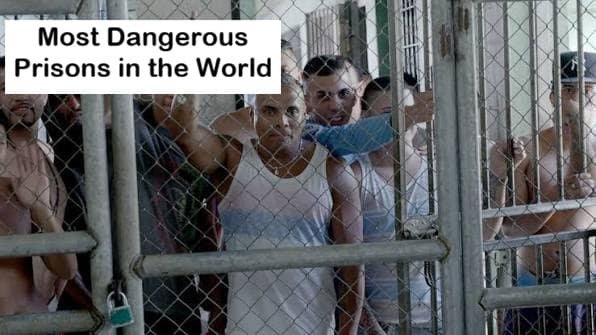
Conditions can change rapidly following raids, transfers, conflict and reform. In Venezuela, a prison once controlled by a gang was retaken by authorities. In Syria, the fall of the Assad government ended the operation of a notorious detention center. It would be misleading to describe every historically notorious site as unchanged in 2026.
This selection focuses on ten prisons or prison complexes with documented episodes of severe danger and gives the relevant timeframe. No reliable global database ranks individual prisons by overall danger, so this is a comparative review of significant cases rather than an official league table. Now, let’s examine the top 10 most dangerous prisons in the world.
| Facility | Country | Documented danger | Period / status |
| 1. CECOT, Tecoluca | El Salvador | Ill-treatment and restricted contact | 2025 evidence; active |
| 2. Makala Central Prison, Kinshasa | DR Congo | Fatal unrest and extreme crowding | 2024 incident; active |
| 3. Insein Prison, Yangon | Myanmar | Political detention and torture reports | 2025–2026; active |
| 4. Evin Prison, Tehran | Iran | Political detention and medical risks | 2025 strikes and transfers |
| 5. Tocorón Prison, Aragua | Venezuela | Former gang control; rights concerns | Gang control ended in 2023 |
| 6. New Bilibid Prison, Muntinlupa | Philippines | Congestion and institutional control | 2025 official census; active |
| 7. Black Beach Prison, Malabo | Equatorial Guinea | Arbitrary detention and abuse reports | Rights reporting; active status uncertain |
| 8. Luzira Prison Complex, Kampala | Uganda | Severe historic overcrowding | Historical crowding estimate; active |
| 9. Goma Central Prison | DR Congo | Extreme crowding and conflict exposure | 2023 figures; subsequent disruption |
| 10. Sednaya Military Prison | Syria | Systematic torture under former regime | Historical; former detention site |
Note: The order is an editorial presentation, not an official or mathematical ranking. Figures, legal circumstances and facility operations must be read with their stated dates and source limits.
1. CECOT, Tecoluca
- Country: El Salvador
- Documented danger: Ill-treatment and restricted contact
- Period / status: 2025 evidence; active
El Salvador’s Center for Terrorism Confinement was constructed during a sweeping anti-gang security campaign. Authorities present its strict incarceration regime as a means to dismantle organized crime, but access for independent scrutiny has been sharply limited.
Dangerous Conditions and Human Rights Concerns
A 2025 investigation by Human Rights Watch and Cristosal documented allegations of systematic beatings, incommunicado detention and inadequate care among Venezuelans sent there. Security against escape does not establish acceptable treatment or due process.
Source: Human Rights Watch / Cristosal investigation, 2025 — https://www.hrw.org/report/2025/11/12/you-have-arrived-in-hell/torture-and-other-abuses-against-venezuelans-in-el
2. Makala Central Prison, Kinshasa
- Country: DR Congo
- Documented danger: Fatal unrest and extreme crowding
- Period / status: 2024 incident; active
Makala was built for roughly 1,500 people but has held many times that number. Severe congestion, limited resources and large numbers of pretrial detainees have made the facility a longstanding focus of humanitarian concern.
Dangerous Conditions and Human Rights Concerns
In September 2024, at least 129 prisoners died during events that officials described as an attempted escape; authorities attributed many deaths to suffocation in the overcrowded prison. The incident showed how confinement conditions themselves can become lethal.
Source: Amnesty International, 2024/25 global report — https://www.amnesty.org/en/documents/pol10/7200/2024/en/
3. Insein Prison, Yangon
- Country: Myanmar
- Documented danger: Political detention and torture reports
- Period / status: 2025–2026; active
Insein has a long history as a prison for political detainees and other prisoners. Following Myanmar’s 2021 military takeover, activists and journalists have faced detention in a wider system condemned by rights organizations.
Dangerous Conditions and Human Rights Concerns
Amnesty International, Human Rights Watch and other investigators have documented torture, inadequate medical treatment and deaths in junta custody; Amnesty reported a 2025 death at Insein linked to a lack of treatment for injuries. Conditions are difficult to verify independently.
Source: Amnesty International, January 2026 — https://www.amnesty.org/en/latest/news/2026/01/myanmar-junta-atrocities-surge-5-years-since-coup./
4. Evin Prison, Tehran
- Country: Iran
- Documented danger: Political detention and medical risks
- Period / status: 2025 strikes and transfers
Evin is associated with the detention of political prisoners, journalists and people prosecuted in sensitive national-security cases. Human rights organizations have repeatedly raised concerns about due process and alleged mistreatment.
Dangerous Conditions and Human Rights Concerns
After air strikes damaged parts of Evin in June 2025, Amnesty International warned that transferred prisoners faced harsh and overcrowded conditions elsewhere, while information about some detainees was withheld. Reporting should distinguish Evin itself from facilities receiving transferees.
Source: Amnesty International, July 2025 — https://www.amnesty.org/en/documents/mde13/0081/2025/en/
5. Tocorón Prison, Aragua
- Country: Venezuela
- Documented danger: Former gang control; rights concerns
- Period / status: Gang control ended in 2023
Tocorón became notorious as an operational center of the Tren de Aragua criminal organization. Reports described how the gang wielded extraordinary influence within the prison before a major government intervention in September 2023.
Dangerous Conditions and Human Rights Concerns
Venezuelan authorities said they dismantled criminal structures and restructured the facility. Human Rights Watch reported continuing concerns and transfers of detainees there after the disputed 2024 election. It is inaccurate to repeat pre-2023 descriptions as present-day facts.
Source: Human Rights Watch, April 2025 — https://www.hrw.org/report/2025/04/30/punished-seeking-change/killings-enforced-disappearances-and-arbitrary-detention
6. New Bilibid Prison, Muntinlupa
- Country: Philippines
- Documented danger: Congestion and institutional control
- Period / status: 2025 official census; active
New Bilibid is one of the Philippines’ principal national penitentiaries. The institution has struggled with overcrowding, prison-gang influence and the challenge of delivering services to a large population across multiple security compounds.
Dangerous Conditions and Human Rights Concerns
Official Bureau of Corrections figures counted 20,999 people against capacity of 7,098 in December 2025—296 percent occupancy. Those figures document pressure on space, although they do not by themselves establish a prison-specific violence rate.
Source: Philippine Bureau of Corrections, December 2025 — https://bucor.gov.ph/wp-content/uploads/2026/01/Statistics-on-Prison-Congestion-as-of-31-December-2025-01092026.pdf
7. Black Beach Prison, Malabo
- Country: Equatorial Guinea
- Documented danger: Arbitrary detention and abuse reports
- Period / status: Rights reporting; active status uncertain
Black Beach has been associated with the detention of political opponents and allegations of severe abuse in Equatorial Guinea. International human rights reporting has described wider patterns of arbitrary detention, torture and restrictions on independent monitoring.
Dangerous Conditions and Human Rights Concerns
Precise recent prisoner totals, security arrangements and the present institutional use of every section are not reliably published. Its inclusion reflects a documented record of human-rights concern, not a measurable global violence ranking.
Source: US State Department, Equatorial Guinea human rights report — https://2021-2025.state.gov/reports/2023-country-reports-on-human-rights-practices/equatorial-guinea/
8. Luzira Prison Complex, Kampala
- Country: Uganda
- Documented danger: Severe historic overcrowding
- Period / status: Historical crowding estimate; active
Luzira is Uganda’s best-known prison complex, holding different categories of prisoners. A US State Department human-rights report cited approximately 8,500 prisoners against an estimated capacity of 3,000 in one reporting period.
Dangerous Conditions and Human Rights Concerns
That degree of crowding can strain sleeping space, healthcare, water and sanitation. These figures are historical and should not be presented as a verified 2026 headcount; Uganda’s prison population and individual facilities have changed since then.
Source: US Department of State, Uganda human rights reporting — https://2021-2025.state.gov/report/custom/9723c87232/
9. Goma Central Prison
- Country: DR Congo
- Documented danger: Extreme crowding and conflict exposure
- Period / status: 2023 figures; subsequent disruption
Goma Central Prison was reported by Amnesty International to have held more than 7,000 inmates despite a stated capacity of 300 in 2023. Its location in eastern Congo also exposed the prison system to insecurity associated with wider regional conflict.
Dangerous Conditions and Human Rights Concerns
Those figures illustrate a grave historic problem, but they cannot be used as the facility’s current occupancy without a fresh verified census. Prison operations and detention populations have been disrupted by fighting in the region.
Source: Amnesty International, 2023 annual findings — https://www.amnesty.org/ar/wp-content/uploads/2024/04/POL1072002024ENGLISH.pdf
10. Sednaya Military Prison
- Country: Syria
- Documented danger: Systematic torture under former regime
- Period / status: Historical; former detention site
Sednaya became an international symbol of torture, disappearance and mass executions under the Assad government. Human rights organizations documented allegations of systematic abuses against detainees over many years.
Dangerous Conditions and Human Rights Concerns
It is listed as a historical case, not as a functioning Assad-era prison in 2026. The prison system changed after the December 2024 fall of Assad’s government. Its legacy underscores why detention-site accountability and evidence preservation matter.
Source: Amnesty International, Syria detention investigations — https://www.amnesty.org/en/latest/news/2017/02/syria-human-slaughterhouse-mass-hangings-and-extermination-at-saydnaya-prison/
What Makes a Prison Dangerous?
Violence is one indicator, but not the only one. The World Prison Brief and UN human-rights bodies have long highlighted the effects of congestion, prolonged pretrial detention and inadequate investment. When far more people are confined than a building was designed to hold, disease control, access to doctors and routine supervision become harder.
Danger may also be imposed by the institution itself. Allegations of torture or denial of basic legal contact require investigation even in prisons built to prevent escape. Conversely, a high-security prison can hold people convicted of serious crimes while still providing adequate care and lawful treatment.
Comparing these ten cases requires dates. A mass-casualty incident from 2024, a crowding estimate from 2018 and a 2025 investigative finding cannot be combined into a single meaningful numeric ranking. Independent monitoring, healthcare, fair procedures and credible oversight are better measures of whether serious harm is being prevented.
Conclusion
The gravest prison risks arise where confinement becomes a threat to life, health or fundamental rights. Reducing those risks requires reliable reporting, independent oversight, lawful detention and prison conditions that protect both staff and the people held in custody.