
Yes, Flock cameras are generally legal in the United States. Police departments, neighbourhood associations, businesses and other organisations may use them when installation and operation comply with federal, state and local laws.
However, their use is increasingly being challenged because the cameras can create searchable records of where vehicles have travelled. Some states strictly limit how long the information may be retained, why police may search it and which agencies may receive it.
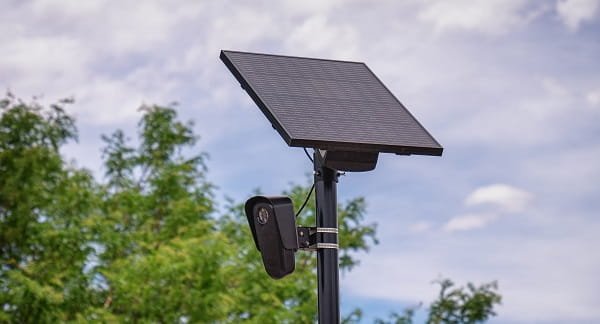
What Are Flock Cameras?
Flock Safety cameras are automated licence plate readers, commonly called ALPRs. They photograph passing vehicles and convert visible information into searchable data.
The system may record:
- The licence plate number and issuing state
- An image of the vehicle
- Vehicle colour, make and other visible features
- The date and time of the sighting
- The camera’s location
Flock says its licence plate readers do not use facial recognition or identify a vehicle’s driver. Its standard policy deletes licence plate data after 30 days, although a different period may apply when required or approved under local law.
Police may use the cameras to locate stolen vehicles, identify cars connected with crimes, find missing people or receive alerts when a listed vehicle passes a camera.
Why Are the Cameras Usually Legal?
Licence plates must normally remain visible while vehicles are used on public roads. Courts have traditionally held that a person has a limited expectation of privacy in a licence plate or vehicle exterior that anyone standing nearby can see.
Ordinary security cameras may also record vehicles travelling through public streets. A Flock camera performs a similar function but automatically reads the plate and makes the information searchable.
For this reason, installing an individual camera beside a public road is not usually treated as an unconstitutional search. Police agencies must still receive any required local approval, follow procurement rules and place the equipment lawfully.
Private businesses and homeowners’ associations may generally install cameras on property they control. They cannot place equipment on government land, utility poles or public rights-of-way without the required permission.
Do Police Need a Warrant?
Police do not necessarily need a warrant every time a Flock camera photographs a vehicle or generates an alert for a stolen car. A single photograph of a vehicle travelling openly on a public road has generally not been treated as a Fourth Amendment search.
The legal issue becomes more difficult when police search large databases to reconstruct a person’s movements over several days or weeks.
In Carpenter v. United States, the US Supreme Court ruled that obtaining extensive historical mobile-phone location records was a Fourth Amendment search. The decision recognised that detailed location information can reveal sensitive facts about a person’s life. However, the Court expressly limited its ruling and did not decide the legality of ordinary security cameras or automated licence plate readers.
The Supreme Court has not yet issued a ruling specifically deciding whether a large network of Flock cameras requires police to obtain a warrant before conducting a historical movement search.
What Have Courts Said About Flock Cameras?
In January 2026, a federal judge ruled that Norfolk, Virginia’s use of 176 Flock cameras did not violate the Fourth Amendment. The judge concluded that photographing vehicles and visible licence plates on public roads did not invade a reasonable expectation of privacy.
The plaintiffs argued that the entire network was different from an isolated camera because it allowed police to search hundreds of vehicle sightings and study people’s routines. They appealed the decision to the Fourth Circuit Court of Appeals.
As of July 31, 2026, that appeal remained ongoing. Therefore, the Norfolk ruling is important, but it has not produced a final nationwide rule governing every Flock network.
State Laws Can Restrict Their Use
Even when Flock cameras are constitutionally permitted, state laws may impose stronger privacy protections.
Virginia’s law, effective July 1, 2026, allows police searches only for defined purposes, such as investigating a suspected crime, locating a missing person or responding to an alert involving a stolen vehicle or outstanding warrant.
Virginia generally requires camera data to be destroyed after 21 days. It also restricts sharing with federal, out-of-state, private and commercial databases, subject to specific exceptions.
California requires ALPR operators to maintain reasonable security measures and publish a usage and privacy policy. Operators must record who searched the system, what information was used, when the search occurred and its purpose.
Other states may impose different retention limits, audit requirements, public-approval procedures or restrictions on data sharing.
Can Flock Evidence Be Used to Stop a Vehicle?
A Flock alert may provide police with an investigative lead, but officers should confirm the information before taking enforcement action. Licence plates may be misread, outdated databases may contain errors, and a vehicle may no longer be driven by the person associated with it.
Whether an alert provides enough legal justification for a traffic stop depends on the information in the alert, its reliability and the surrounding circumstances. A camera match does not automatically prove that the driver committed a crime.
Is It Legal to Block or Damage a Flock Camera?
No one should remove, cover, paint, damage or interfere with a Flock camera they do not own. Even when someone believes the system violates privacy, damaging the equipment can lead to vandalism, criminal-mischief or property-damage charges.
Drivers should also avoid licence plate covers or devices designed to defeat automated readers. Many states prohibit equipment that hides, alters or interferes with the visibility of a registration plate.
The Current Legal Position
Flock cameras are generally legal, but their operation is not unrestricted. Police departments and private users must follow property rules, state privacy laws, retention limits, access policies and data-sharing restrictions.
Capturing one publicly visible licence plate is usually lawful. The more unsettled question is whether police may use a large camera network to reconstruct a person’s movements without a warrant. Courts and state legislatures are still deciding where ordinary roadside observation ends and constitutionally significant mass surveillance begins.