
Brass knuckles are illegal or heavily restricted in many parts of the United States because they are designed to increase the damage caused by a punch. They are easy to conceal, have little ordinary practical use and can turn a fistfight into a serious or potentially fatal assault.
However, brass knuckles are not prohibited everywhere. Their legality depends mainly on state and local law. Some states ban possession completely, while others permit ownership but restrict carrying, concealment or use.
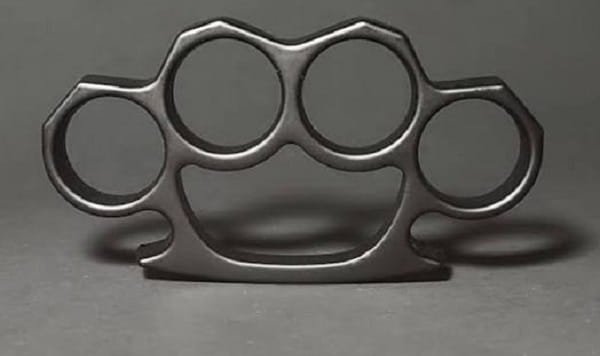
What Are Brass Knuckles?
Brass knuckles, also called metal knuckles or knuckle dusters, are weapons worn over the fingers. Despite the name, they may be made from brass, steel, aluminium, hard plastic or another strong material.
The device normally has finger holes connected to a solid frame. When a person punches while wearing it, the hard material strikes the other person instead of the softer surface of the bare knuckles.
This concentrates the force of the punch into a smaller and harder contact area. It can cause severe bruising, cuts, broken bones and head injuries. Blunt-force impacts can produce abrasions, lacerations, fractures and internal injuries, particularly when the head or face is struck.
Why Do States Ban Them?
The main reason is that brass knuckles are generally designed as weapons rather than ordinary tools. Unlike a pocketknife, which may be used for work, food preparation or outdoor activities, metal knuckles have few common purposes apart from striking someone.
Pennsylvania law, for example, classifies metal knuckles as prohibited offensive weapons and describes such weapons as devices used to inflict serious bodily injury while serving no common lawful purpose.
Lawmakers also consider how easily the weapon can be hidden. Brass knuckles can fit inside a pocket, handbag or vehicle compartment. A person may therefore carry them without attracting attention and produce them suddenly during an argument.
They Can Make an Ordinary Punch More Dangerous
A bare-handed punch can already cause serious injury. Brass knuckles add a hard surface between the attacker’s hand and the victim’s body.
The metal frame may also protect parts of the user’s fingers, allowing the person to strike harder than they otherwise would. The raised or reinforced surface can cut the skin while the force underneath damages bone and tissue.
The risk becomes especially serious when the victim is struck in the temple, jaw, nose or other part of the head. Because the weapon can cause severe injury quickly, many legislatures regulate it without requiring proof that the owner had already used it in an attack.
Are Brass Knuckles Illegal Under Federal Law?
There is no simple federal law that makes ordinary possession of brass knuckles illegal everywhere in the country. Most rules are created by individual states and cities.
Federal law can still prohibit them in particular locations. A dangerous weapon capable of causing death or serious bodily injury generally cannot be knowingly carried into a federal facility or federal courthouse, except under limited legal exceptions.
Airports, schools, government buildings and other secured locations may have additional weapon restrictions even in states where private possession is otherwise lawful.
Which States Prohibit Brass Knuckles?
The rules vary considerably. California generally prohibits manufacturing, importing, selling, giving, lending or possessing metal knuckles. A violation may lead to imprisonment.
New York law lists metal and plastic knuckles among weapons whose possession can amount to fourth-degree criminal possession of a weapon.
Washington prohibits manufacturing, selling or possessing metal knuckles and classifies a violation as a gross misdemeanour. Michigan treats the manufacture, sale or possession of metallic knuckles as a felony, subject to limited exceptions.
These examples do not represent every state. Penalties and exceptions may change, so the current law for the relevant state and city must always be checked.
Where Are They Legal?
Some states permit brass knuckles or have removed older statewide bans. Texas, for example, removed “knuckles” from its prohibited-weapons law through legislation that took effect in September 2019.
Even where ownership is legal, carrying them may still create problems. Local ordinances may ban concealed weapons, and businesses can prohibit weapons on private property. Using or displaying brass knuckles during a threat can also result in assault, robbery or weapons charges.
A person may lawfully own an item but still commit an offence by carrying it in a prohibited place or using it to intimidate someone.
Does Self-Defence Make Them Legal?
Claiming that brass knuckles are intended for self-defence does not cancel a possession ban. In states where the weapon itself is prohibited, carrying it for protection may still be unlawful.
Where possession is allowed, any use of force must satisfy the state’s self-defence rules. Force generally must be reasonably necessary and proportionate to the threat. Continuing to strike someone after the danger has ended may turn lawful defence into criminal assault.
The Legal Position
Brass knuckles are restricted because they are concealable weapons designed to make punches more damaging. Their limited non-violent use and ability to cause severe injuries have led many states to ban possession, manufacture, sale or public carrying.
Still, they are not illegal throughout the entire United States. The exact answer depends on state law, city ordinances, the location where they are carried and how they are used.