
House Judiciary Committee Chairman Jim Jordan has referred former special counsel Jack Smith to the US Department of Justice for possible criminal investigation. Jordan alleges that Smith knowingly gave false or misleading answers while testifying before Congress about the collection of lawmakers’ communications during the federal investigation into efforts to overturn the 2020 presidential election.
The referral is a request for the Justice Department to examine Smith’s conduct. It is not a criminal charge, arrest warrant or court finding. Smith’s lawyers strongly deny the allegation and maintain that his testimony was accurate.
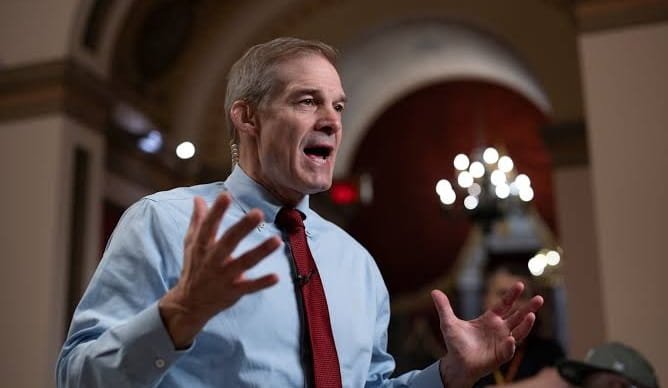
Why Jim Jordan Issued the Referral
Jordan sent the criminal referral to the Justice Department on July 22, 2026. It concerns Smith’s closed-door deposition before the House Judiciary Committee on December 17, 2025.
The committee questioned Smith about investigative steps taken during the election-interference inquiry known within the Justice Department as “Arctic Frost.” Prosecutors had sought telephone toll records connected with several members of Congress.
Toll records normally identify information such as the phone numbers involved, the date and time of a call, and its duration. They do not contain the spoken content of calls or the written content of text messages.
Jordan’s referral cites a possible violation of 18 U.S.C. § 1001, the federal law covering knowingly and intentionally false material statements made in matters within the jurisdiction of Congress or the executive branch.
What Jack Smith Said During His Testimony
During the deposition, Smith was asked whether the toll records requested from senators included the content of phone calls. He answered no.
He was then asked whether the toll records requested from a member of Congress contained the content of text messages. Smith again answered no. He explained that toll records generally contain non-content information, including when a call began, when it ended and which numbers were involved.
The official transcript confirms that the questions and answers specifically referred to toll records.
Jordan argues that Smith’s answers created a broader impression that neither Smith nor members of his team had accessed the content of lawmakers’ text messages from any source.
What the Newly Released Records Allegedly Show
The referral followed the release of additional Justice Department records by Senate Judiciary Committee Chairman Chuck Grassley.
According to Jordan, those records show that Smith’s team obtained and reviewed text messages involving 44 members of Congress from both political parties. The messages were reportedly included in presidential records obtained separately from the National Archives and Records Administration.
They were communications between lawmakers and Trump administration officials or advisers. The materials were therefore not obtained through the telephone toll-record subpoenas discussed during Smith’s deposition.
Jordan also alleges that some of the messages may have contained constitutionally privileged communications and that investigators received them without completing the required review by a separate filter team. A filter team is generally used to prevent potentially protected material from reaching prosecutors conducting the main investigation.
The committee says the new documents contradict the impression created by Smith’s testimony. However, no court has determined that Smith deliberately concealed information or made a criminally false statement.
How Jack Smith Has Responded
Smith’s lawyers, Lanny Breuer and Peter Koski, have described the referral as baseless. They argue that Smith answered the exact questions placed before him.
According to his legal team, Smith was asked whether the toll records included message content. His answer was truthful because toll records do not include the contents of calls or texts. They say he was not asked whether a separate National Archives production contained messages exchanged between lawmakers and White House personnel.
The lawyers therefore reject Jordan’s position that Smith was required to provide information beyond the scope of the questions. They also accuse the committee of attempting to turn a disagreement over testimony into a criminal matter.
Democratic Representative Jamie Raskin, the Judiciary Committee’s ranking member, has similarly argued that the referral misrepresents the deposition.
Does the Referral Mean Smith Will Be Prosecuted?
A congressional criminal referral does not legally require the Justice Department to open a case or bring charges. Prosecutors must independently examine the documents, testimony and surrounding circumstances.
To establish a false-statements offence, the government would generally need evidence that Smith’s statement was false, material and made knowingly and intentionally. A vague answer, misunderstanding or truthful response to a narrowly phrased question would not automatically satisfy that standard.
The Justice Department confirmed that it received the referral and said it would investigate evidence of criminal conduct. As of July 29, 2026, no criminal charge against Smith had been announced.
Smith previously led federal prosecutions concerning Donald Trump’s alleged efforts to reverse the 2020 election result and his handling of classified documents. Both cases ended after Trump won the 2024 election because longstanding Justice Department policy prevents the federal prosecution of a sitting president. Smith later resigned from the department.
The central issue now is whether Smith’s answers were intentionally misleading, as Jordan alleges, or accurate responses to limited questions about toll records, as Smith’s lawyers maintain. That dispute remains unresolved.