
Taking a picture of another person without asking permission is not automatically illegal in the United States. Whether it is allowed depends mainly on where the photograph was taken, what the person was doing, how the image was captured and how the photograph is later used.
A person standing on a public street, attending an outdoor event or appearing in another place open to the public usually has a limited expectation of privacy. However, taking photographs in private locations, secretly capturing intimate areas or using someone’s image in an advertisement can create serious legal problems.
Because privacy and photography laws differ between states, the exact answer may change according to the location and circumstances.
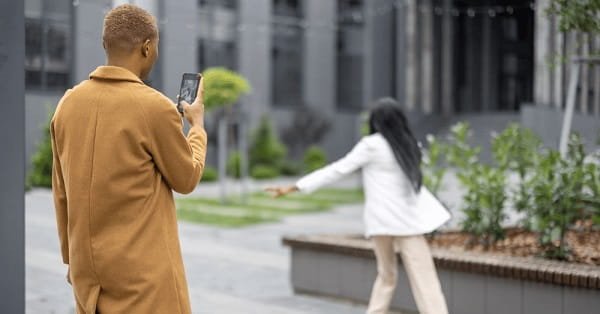
Taking Pictures in Public Places
In general, people may photograph things that are plainly visible from public places. This can include streets, parks, public demonstrations, buildings and people who appear in those locations.
Consent is not normally required simply because another person appears in the photograph. For example, someone taking a picture of a busy market does not usually need permission from every person visible in the background.
People also generally have a First Amendment right to photograph or record police officers performing official duties in public, provided they remain at a reasonable distance and do not interfere with police activity. Courts have recognised that the right may still be subject to reasonable restrictions involving safety, location and obstruction.
However, being in public does not make every form of photography acceptable. State laws may prohibit conduct such as stalking, harassment, repeated unwanted following or taking photographs for an unlawful purpose.
Photography Where Privacy Is Expected
Taking a photograph without consent is much more likely to be illegal when the person has a reasonable expectation of privacy.
Places where privacy would normally be expected include:
- Bathrooms and public restrooms
- Changing rooms and fitting rooms
- Hotel rooms
- Bedrooms and private homes
- Medical examination rooms
- Locker rooms and shower areas
Federal video-voyeurism law prohibits intentionally capturing an image of another person’s private area without consent when that person reasonably expects privacy. The law can apply even when the private area is secretly photographed in a location that is otherwise open to the public.
States have their own voyeurism and unlawful-surveillance laws. Washington law, for example, prohibits certain intentional photography of intimate areas without the person’s knowledge or consent where privacy is reasonably expected.
Taking Photographs on Private Property
A property owner may set rules restricting photography inside a privately owned location. This can apply to shops, restaurants, theatres, hospitals, schools, offices, museums and entertainment venues.
Taking a photograph against the owner’s rules may not always be a separate criminal offence. However, the owner can ask the photographer to stop or leave. Refusing to leave after being instructed may lead to a trespassing complaint.
Some government-controlled places also have special restrictions. Courts, military facilities, secure government buildings and airport security areas may limit photography for safety or operational reasons. A federal prosecution in 2026, for example, involved unauthorised photography of designated military installations.
Using Someone’s Picture for Advertising
Taking a photograph and commercially using it are separate legal questions.
A street photograph may be lawful to capture, but using a recognisable person’s face to advertise a product or business may require permission. Many states recognise rights connected to a person’s name, image or likeness.
California law allows a person to seek damages when their photograph or likeness is knowingly used without consent to advertise or sell products, merchandise or services.
New York law similarly restricts the unauthorised use of a living person’s photograph for advertising or trade purposes. Courts generally require the person to show that the image was used commercially without the required consent.
News reporting, documentaries, artistic works and matters of public interest may receive broader legal protection than ordinary advertisements. The precise distinction depends on the facts and applicable state law.
Posting the Photograph Online
A photograph that was lawful to take can still create legal risk when it is posted online.
Problems may arise when a picture is published with false claims, used to threaten or humiliate someone, reveals confidential information or forms part of continued harassment. Sharing intimate photographs without permission may also violate state laws, even when the person originally agreed to have the photograph taken.
Photographing children is not automatically illegal in a public place, but schools, childcare centres and organised events commonly have strict photography rules. Images involving children should be handled carefully, particularly when names, locations or personal details could expose them to risk.
Does the Person in the Photograph Own It?
The person appearing in a photograph does not normally own the photograph merely because their face or body is shown in it. In most cases, the photographer is the initial copyright owner because the photographer created the image.
However, copyright ownership does not cancel privacy, publicity, harassment or voyeurism laws. A photographer may own the picture while still lacking the legal right to use or distribute it in a particular way.
Therefore, taking pictures without consent is generally allowed in ordinary public settings, but it may become illegal when privacy is reasonably expected, photography is prohibited at the location, intimate areas are secretly captured, or the image is used commercially or harmfully without permission.