
Yes. Open carry of firearms is generally legal in Ohio in 2026 for a person who may lawfully possess the firearm. Ohio does not generally require a special open-carry permit or concealed handgun license simply because a firearm is being carried openly.
The Ohio Attorney General’s concealed-carry guidance expressly states that open carry of firearms is legal in Ohio and that the state’s concealed-carry laws do not regulate ordinary open carry in the same way they regulate concealed handguns.
However, open carry is not allowed everywhere. Schools, courthouses, certain alcohol-serving premises and other restricted locations are subject to separate laws. Private-property owners can also restrict firearms on their property.
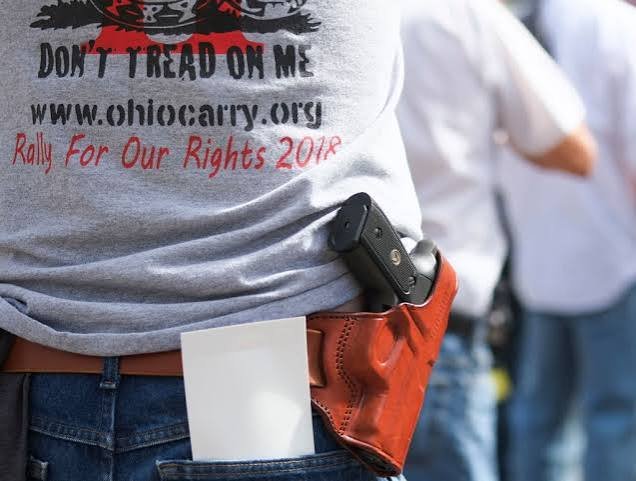
Do You Need a Permit to Open Carry in Ohio?
Generally, no permit is required simply to openly carry a firearm in Ohio.
Ohio law also strongly limits local governments from creating their own separate firearm-carry rules. Ohio Revised Code Section 9.68 establishes statewide uniformity for firearm possession, transportation and carrying and specifically recognizes both openly and concealed carrying within its scope.
This means a city generally cannot create an entirely separate open-carry licensing system that conflicts with Ohio state law.
A person must still be legally permitted to possess the firearm and comply with restrictions that apply to particular locations and circumstances.
Is Ohio a Constitutional Carry State?
Yes. Ohio has permitted permitless concealed carry for qualifying adults since June 13, 2022.
Under Ohio Revised Code Section 2923.111, a “qualifying adult” who is at least 21 years old and is not legally prohibited from possessing a firearm may carry a concealed handgun without obtaining an Ohio concealed handgun license, subject to the same major restrictions that apply to license holders.
This is separate from open carry.
Open carry was already generally lawful before Ohio adopted permitless concealed carry. The 2022 law mainly changed the rules for carrying a handgun concealed.
Who Cannot Legally Carry a Firearm in Ohio?
Open-carry rights do not override laws prohibiting certain people from possessing firearms.
Ohio Revised Code Section 2923.13 prohibits firearm possession by certain people considered to be under a weapons disability. Depending on the circumstances, this can include people with specified:
- Felony offenses of violence
- Felony drug offenses
- Applicable indictments
- Court findings concerning mental incompetence
- Other disqualifying conditions established by law
Violation of Ohio’s weapons-under-disability law can be a serious criminal offense.
Federal firearm restrictions may also apply independently of Ohio law.
Can You Open Carry a Handgun if You Are Under 21?
Age rules require some care because Ohio law separately regulates selling and furnishing firearms.
Ohio Revised Code Section 2923.21 generally prohibits:
- Selling a firearm to someone under 18
- Selling a handgun to someone under 21
- Furnishing a handgun to someone under 21, subject to specified exceptions such as lawful hunting, sporting or educational purposes under appropriate supervision
Certain exceptions also exist for qualifying law-enforcement officers and active-duty military members.
Ohio’s permitless concealed-carry law is clearer: a qualifying adult must be 21 or older.
Because possession, acquisition and carrying rules can interact differently for people ages 18 to 20, younger adults should not assume that the general statement that “open carry is legal” answers every age-related firearm question.
Can You Open Carry in a School in Ohio?
Generally, no.
Ohio Revised Code Section 2923.122 prohibits knowingly bringing or possessing a deadly weapon or dangerous ordnance in a school safety zone, subject to specific statutory exceptions.
A school safety zone can cover more than the inside of the school building.
Ohio law provides limited exceptions for certain authorized people and specified vehicle situations, but ordinary open carry should not be treated as permitted simply because Ohio otherwise allows open carrying.
Can You Open Carry in an Ohio Courthouse?
Generally, no.
Ohio Revised Code Section 2923.123 prohibits knowingly bringing a deadly weapon into a courthouse or another building or structure containing a courtroom and also prohibits possession or control of such a weapon there, subject to limited statutory exceptions.
The prohibition is not avoided simply by carrying the firearm openly instead of concealing it.
Can You Open Carry in a Bar or Restaurant That Serves Alcohol?
Ohio has specific firearm rules for premises holding certain liquor permits.
Under Ohio Revised Code Section 2923.121, firearm possession is generally prohibited in a room where people are consuming beer or intoxicating liquor on premises covered by a qualifying D liquor permit, subject to statutory exceptions.
One important exception applies to certain people legally carrying handguns who are not consuming alcohol and are not under the influence.
Separately, Ohio law states that no person may carry or use a firearm while under the influence of alcohol or a drug of abuse.
Therefore, open carry should never be interpreted as permission to carry a firearm while intoxicated.
Can Businesses Ban Open Carry?
Private-property rights still matter.
Ohio’s firearm laws do not give a person an unlimited right to remain armed on somebody else’s private property against the property owner’s rules.
Ohio law recognizes the ability of private employers to establish policies concerning firearms on their property.
A store, workplace or other private property may therefore have restrictions concerning firearms. If a property owner or authorized representative lawfully requires someone carrying a firearm to leave, the person should not assume Ohio’s general open-carry rule gives a right to remain.
Can You Open Carry in a Vehicle in Ohio?
Vehicle rules are more complicated than ordinary open carry on foot.
Ohio Revised Code Section 2923.16 regulates transportation of firearms in motor vehicles. It generally restricts having a loaded firearm accessible inside a vehicle, but important exceptions apply to handguns carried by people who qualify under Ohio’s concealed-carry laws.
Because Ohio now treats a qualifying permitless carrier similarly to a concealed handgun license holder for many purposes, a qualifying adult may carry a handgun in a vehicle subject to the applicable requirements.
Long guns and other firearms can be subject to different transportation requirements. A person should not assume that simply placing a firearm where it can be seen inside a vehicle automatically satisfies Ohio law.
Do You Have to Tell Police You Are Carrying a Gun?
Ohio changed its former immediate-notification requirement.
For concealed handgun carriers, current law generally requires disclosure when a law-enforcement officer asks whether the person is carrying a concealed handgun, rather than requiring the carrier to immediately announce the firearm without being asked.
During a qualifying law-enforcement stop, Ohio law also contains requirements concerning keeping hands visible, not touching the loaded handgun and complying with lawful police orders.
Openly carrying a firearm does not remove the obligation to comply with lawful instructions during a police encounter.
Is Open Carry Allowed in Every Ohio City?
Ohio generally uses statewide firearm preemption.
Section 9.68 of the Ohio Revised Code states that firearm ownership, possession, transportation, storage and carrying are matters governed uniformly throughout the state, except where state or federal law specifically provides otherwise.
This significantly limits cities, counties and other political subdivisions from creating firearm regulations that conflict with Ohio’s statewide scheme.
However, location-specific state laws and federal restrictions still apply regardless of which Ohio city a person is in.
Is Open Carry the Same as Brandishing a Gun?
No.
Open carry generally means that a firearm is carried visibly in a lawful manner. It does not give someone the right to point, threaten with, improperly discharge or otherwise misuse the firearm.
Whether conduct becomes a criminal offense depends on what the person does and the circumstances involved.
Simply knowing that open carry is generally permitted therefore does not mean every public display or handling of a firearm is lawful.
Final Word
Open carry is generally legal in Ohio in 2026, and a person who may lawfully possess a firearm normally does not need a special open-carry permit simply to carry it visibly. Ohio also allows qualifying adults age 21 and older to carry concealed handguns without a license under its permitless-carry law.
The right to open carry is not unlimited. Firearms remain restricted in locations such as school safety zones and courthouses, special rules apply to liquor-permit premises and vehicles, and private-property owners can impose firearm restrictions.
For Ohio residents and visitors, the key point is simple: open carry may be legal generally, but where the firearm is carried, who is carrying it and the circumstances of possession still determine whether the conduct is lawful.