
The Smartphone AI Settlement has opened a new claims process for U.S. iPhone buyers who allege that Apple promoted artificial intelligence features that were not available as expected on certain devices. Apple has agreed to create a $250 million settlement fund to resolve a class action over the marketing of Siri and Apple Intelligence features. The company denies wrongdoing, and the settlement still requires final court approval.
The settlement applies to qualifying purchases of the iPhone 15 Pro, iPhone 15 Pro Max, and iPhone 16 models made in the United States between June 10, 2024, and March 29, 2025. Eligible consumers and businesses must submit a valid claim by December 21, 2026, if they want to receive payment.
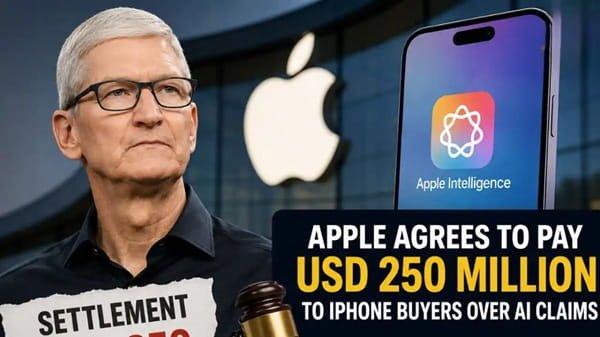
What Is the Smartphone AI Settlement About?
The lawsuit alleged that Apple advertised certain Siri and Apple Intelligence capabilities in a way that led buyers to expect those features when purchasing eligible iPhones. Plaintiffs claimed some of the promoted functions were delayed or unavailable during the relevant period.
Apple disputed the allegations and did not admit that its advertising was deceptive or unlawful. Rather than continue litigating the claims, the parties negotiated the proposed $250 million settlement.
The case is commonly associated with Landsheft v. Apple Inc., a federal class action in California. The court granted preliminary approval of the settlement on July 17, 2026, allowing the notice and claims process to begin.
Who Qualifies for the Apple Smartphone AI Settlement?
To qualify, a person or business generally must have been the original purchaser of an eligible device in the United States during the settlement period.
Eligible models include the iPhone 15 Pro, iPhone 15 Pro Max, iPhone 16, iPhone 16e, iPhone 16 Plus, iPhone 16 Pro, and iPhone 16 Pro Max.
The purchase must have occurred between June 10, 2024, and March 29, 2025, and the device must have been bought for personal or business use rather than resale.
A claimant must also confirm that, at the time of purchase, the buyer expected to receive certain Siri Apple Intelligence features that were not received as expected.
How Much Money Can Eligible iPhone Owners Receive?
Settlement Class Members who submit valid claims are expected to receive $25 per eligible device as a base payment.
That amount may change depending on the number of valid claims and other settlement expenses. Under the agreement, the payment can potentially increase on a proportional basis to as much as $95 per eligible device. It may also be reduced if the number of approved claims is high enough to require a lower distribution.
Because the final payment depends on the claims process, no claimant should assume in advance that the maximum amount will be paid.
How to File a Claim
The claim period began on September 21, 2026. Eligible class members must personally submit a valid claim by December 21, 2026.
The claim form requires current contact information and information sufficient to confirm the purchase or ownership of the eligible iPhone. Claimants must also certify that they expected the covered Siri Apple Intelligence features when they bought the device.
Approved claimants may choose from the payment methods provided by the settlement administrator, including physical or digital checks. A person who remains in the settlement class but does not submit a valid claim will not receive a payment.
Important Settlement Deadlines
Several dates are especially important.
The deadline to file a claim is December 21, 2026. The same date is also the deadline to request exclusion from the settlement or submit an objection.
The court has scheduled the final approval hearing for February 24, 2027. At that hearing, the judge will consider whether the settlement is fair, reasonable, and adequate.
Payments cannot be treated as final until the settlement receives final approval and any required post-approval procedures are completed.
What Rights Do Class Members Give Up?
Class members who stay in the settlement will be bound by the final judgment if the deal is approved. In general, they will release the covered claims described in the settlement agreement.
Consumers who want to preserve the ability to pursue their own lawsuit over the released claims must follow the formal exclusion process by the December 21 deadline. Those who exclude themselves will not receive a settlement payment.
Anyone considering separate litigation should review the settlement documents carefully and may wish to seek legal advice about how the release provisions affect individual rights.
Why the Case Matters for AI Product Marketing
The Smartphone AI Settlement comes as technology companies increasingly promote devices using artificial intelligence features as major selling points. The case highlights the legal risks that can arise when advertised software capabilities are delayed, limited, or released in a different form than consumers expected.
For manufacturers, AI-related marketing may face the same consumer-protection scrutiny as other product claims. Clear descriptions of feature availability, timing, hardware requirements, and software limitations can become important when buyers argue that a purchase decision was influenced by advertising.
The Apple settlement does not establish that the company violated the law, but it shows how disputes over future or developing AI functions can become significant class-action litigation.
Conclusion
The Smartphone AI Settlement creates a potential payment opportunity for qualifying U.S. purchasers of certain iPhone 15 Pro and iPhone 16 models. Apple has agreed to fund a $250 million settlement while continuing to deny the allegations.
Eligible claimants must act by December 21, 2026. The expected base payment is $25 per qualifying device, with the possibility of an increase to as much as $95 per device depending on the final claims calculation.
The settlement is not yet final. The next major legal step is the February 24, 2027 final approval hearing, after which payments can move forward if the court approves the agreement.