
Driving barefoot is generally not illegal in the United States. For ordinary passenger vehicles, there is no general federal law requiring drivers to wear shoes. Current reviews of state traffic laws also report no statewide prohibition applying simply because someone operates a car without footwear. The Missouri State Highway Patrol, for example, expressly confirms that driving barefoot is legal in Missouri.
However, barefoot driving can still create safety, liability and insurance problems. A driver may face consequences if the lack of footwear contributes to careless driving, loss of vehicle control or an accident.
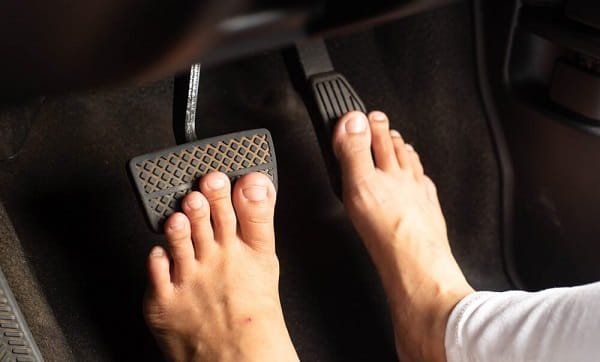
Why Do People Think Barefoot Driving Is Illegal?
The belief probably developed because driving instructors, parents and safety organisations have long advised motorists to wear suitable shoes. Over time, many people began repeating this safety recommendation as though it were a traffic law.
The confusion may also come from rules applying to certain workplaces, commercial activities or motorcycles. Such requirements do not normally apply to someone driving a private passenger car.
Another reason is that police officers may warn barefoot drivers about safety. A warning that the practice is dangerous does not necessarily mean the officer can issue a ticket solely for having no shoes.
When Can Barefoot Driving Cause Legal Trouble?
Although being barefoot may not be an offence, every driver must maintain proper control of the vehicle. States have laws against reckless, careless or negligent driving.
Suppose a driver’s wet foot slips from the brake pedal and causes a collision. Police may issue a citation for unsafe driving, failure to stop or loss of control. The charge would relate to the person’s driving behaviour—not specifically to the absence of shoes.
Barefoot driving may also become relevant in a personal-injury lawsuit. Another driver could argue that operating the vehicle without suitable footwear contributed to the crash. An insurance company might examine whether the driver took reasonable precautions.
Being barefoot does not automatically prove negligence. Evidence would still be needed to show that it affected pedal control or contributed to the accident.
What Are the Main Safety Risks?
Bare feet may provide good contact with the pedals under normal conditions, but they offer less protection and support than suitable driving shoes.
Wet or sweaty feet can slip from a smooth pedal. A driver may also hesitate to press the brake forcefully if the pedal is uncomfortable against the foot. This delay could matter during emergency braking.
A small stone, sharp object or existing foot injury can cause sudden pain and distract the driver. Barefoot motorists may also experience difficulty leaving the vehicle after a crash because the road may contain broken glass, sharp metal or hot surfaces.
These risks explain why suitable footwear is normally recommended even where barefoot driving is lawful.
Are Flip-Flops Safer Than Driving Barefoot?
Not always. Loose flip-flops can bend, slide from the foot or become trapped underneath a pedal. High heels, thick platform shoes and heavy boots may also reduce pedal sensitivity or make it harder to move quickly between the accelerator and brake.
The Missouri State Highway Patrol notes that driving barefoot may sometimes be safer than using thin flip-flops, wedges or certain high-heeled shoes. Loose footwear can twist or become caught beneath a pedal, creating a serious hazard.
A driver who removes unsuitable footwear should place it safely away from the pedals. Shoes left loose near the driver’s feet could slide forward and block the brake or accelerator.
What Shoes Are Best for Driving?
The safest driving shoes normally have a flat sole, secure heel and enough grip to prevent slipping. The shoe should fit properly and allow the driver to feel how much pressure is being applied to each pedal.
Suitable trainers, loafers and other secure flat-soled shoes are generally better than flip-flops, high heels or very thick boots.
Drivers travelling from a beach, swimming pool or formal event can keep a comfortable pair of driving shoes in the vehicle. They can change shoes before starting the journey and store the removed pair where it cannot reach the pedals.
Are There Any Exceptions?
Special rules may apply to motorcycles, commercial drivers, employees using company vehicles or people driving on private industrial property. Employers may also require protective footwear as part of workplace safety policies.
Local laws and licence conditions should therefore be checked when the situation involves something other than an ordinary personal car.
The Legal Position
Barefoot driving itself is generally legal. The real legal requirement is that the driver must remain in control and operate the vehicle safely.
A person who drives barefoot without difficulty will not normally receive a ticket merely for having no shoes. But when bare feet contribute to dangerous driving or a collision, they may become relevant to a traffic charge, insurance decision or negligence claim.
Therefore, the question is not simply whether barefoot driving is legal. The more important question is whether the driver can control the pedals safely under the conditions.