
Modern prison systems operate inside a surprising number of buildings whose foundations belong to another century. Behind old stone gateways and Victorian brick walls, correctional officers now manage electronic records, safeguarding procedures, education programmes and contemporary healthcare. The contrast is striking: some institutions established when imprisonment was still developing into a major criminal punishment continue to hold people nearly two centuries later. Their survival also raises serious questions about overcrowding, sanitation, accessibility and the costs of maintaining historic buildings.
The history requires care. A prison’s founding year is not always the age of its surviving cellblocks. Some have been rebuilt, expanded or temporarily repurposed while keeping the same institutional identity. Others have become museums and no longer qualify as working prisons. The establishments below are documented as operating prisons in recent government or prison-inspection records; the dates describe their origins rather than claiming that every original structure survives. Their stories trace the transformation of imprisonment from local houses of correction to highly regulated national services.
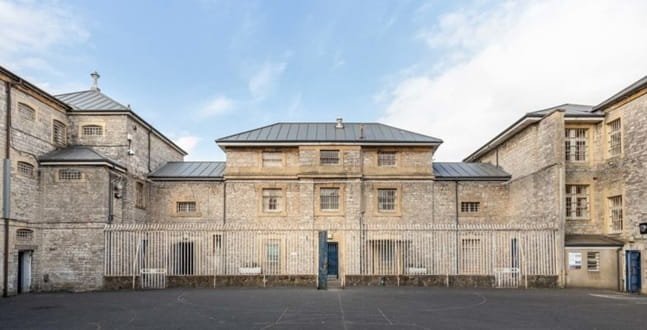
Now let’s check out the top 10 oldest operating prisons in the world today.
Oldest Operating Prisons: Quick Comparison
| Prison | Location | Established or opened | Modern role |
| HMP Wakefield | England | 1594 origins | High-security men’s prison |
| HMP Stafford | England | 1793 | Adult men’s prison |
| New Jersey State Prison | United States | 1798 | Maximum-security facility |
| Auburn Correctional Facility | United States | 1817 | Maximum-security facility |
| HMP Brixton | England | 1819 | Adult men’s prison |
| HMP Maidstone | England | 1819 | Foreign-national men’s prison |
| Limerick Prison | Ireland | 1821 | Adult prison complex |
| Sing Sing Correctional Facility | United States | 1826 | Maximum-security facility |
| Portlaoise Prison | Ireland | 1830s | High-security men’s prison |
| HMP Pentonville | England | 1842 | Adult men’s prison |
1. HMP Wakefield, England — Origins in 1594
Wakefield’s prison history reaches back to a house of correction established in 1594, making it an extraordinary example of a custodial site with centuries of institutional history. Most surviving buildings are considerably younger, so the date should not be confused with an untouched Elizabethan prison. The establishment evolved into a high-security prison holding men serving lengthy sentences for serious offences.
An April 2026 inspection follow-up, published by HM Inspectorate of Prisons in June, confirms that Wakefield remained active. Inspectors examined prisoner safety, healthcare and time spent outside cells. Its importance lies not only in age but also in the challenge of operating a modern high-security regime on a historically constrained site.
2. HMP Stafford, England — Opened in 1793
Stafford’s present prison developed from a county gaol erected between 1787 and 1793. The project reflected late-eighteenth-century pressure to replace inadequate detention buildings with more organized accommodation. The prison was expanded repeatedly during the nineteenth century as changing legislation required different groups of prisoners to be housed separately.
Today Stafford houses adult men convicted of sexual offences. The UK government’s visitor information was updated in August 2026, confirming continuing use. Surviving historic portions sit alongside later improvements, illustrating how prison administrations adapt buildings never designed for modern treatment programmes or accessibility requirements.
3. New Jersey State Prison, United States — Established in 1798
The state prison complex in Trenton dates its institutional origins to the Penitentiary House of 1798. Subsequent construction included a fortress-style penitentiary developed during the 1830s and much later additions. The unusual continuity of the prison site is central to its place in American penal history.
New Jersey’s correctional ombudsperson reported in 2026 that the West Compound remained in use despite serious concerns about antiquated accommodation. That official assessment is especially revealing: an exceptionally old operating prison is not automatically an admirable model. Historic buildings may impose significant burdens on prisoner welfare and everyday management.
4. Auburn Correctional Facility, United States — Began Receiving Prisoners in 1817
Auburn was authorized by New York lawmakers in 1816 and began housing prisoners in 1817. It became internationally influential through the nineteenth-century ‘Auburn system,’ which combined congregate prison labor with silence and separation at night. The model affected prison construction and discipline far beyond New York.
A state corrections audit describes Auburn as the oldest continuously operating maximum-security prison in the United States, a more specific claim than ‘world’s oldest prison.’ Its historic importance also invites criticism: disciplinary practices associated with early penitentiaries would be unacceptable under many modern standards.
5. HMP Brixton, England — Opened in 1819
Brixton opened in south London in 1819, during an era of intense experimentation with punishment, classification and prison management. The institution has changed its functions over time, but it remains embedded in a densely populated part of the capital rather than isolated on a remote correctional campus.
The Ministry of Justice continues to list Brixton as an operational men’s prison. Its long history underscores the difficulty of providing suitable activity space, healthcare and visitor arrangements within an old urban prison footprint. The building’s age and the continuity of its name are separate from the age of every housing unit.
6. HMP Maidstone, England — Opened in 1819
Maidstone Prison was constructed on a new site after earlier county lockups became unsuitable. Historic England records that prisoners were transferred from the former Bridewell beginning in late 1818, and the new prison formally opened in 1819. Surviving nineteenth-century fabric remains an important part of the townscape.
The establishment now specializes in holding foreign-national male prisoners. HM Inspectorate of Prisons published a 2026 inspection report discussing staffing, education, prisoner relationships and ageing infrastructure. Its story shows how an old county prison can acquire a national specialist role while retaining much of its historic setting.
7. Limerick Prison, Ireland — Built in 1821
Limerick Prison was constructed in 1821 and has long served counties in Ireland’s southwest. Its history includes significant alterations to living conditions and the arrangement of accommodation for men and women. In recent years the prison service has acknowledged the limitations of the older buildings, particularly their cramped cells.
A purpose-built female prison opened on the site in 2023, replacing women’s accommodation in an early-nineteenth-century wing. This did not end the institution’s operation; it modernized part of a functioning complex. Limerick demonstrates why continuity should be understood as the continuing prison establishment, not uninterrupted use of its oldest rooms.
8. Sing Sing Correctional Facility, United States — Established in 1826
Sing Sing was built at Ossining, New York, after lawmakers decided to replace the overcrowded Newgate prison in Manhattan. According to the New York State Archives, 169 men were confined at Sing Sing by mid-1826, even though construction was not completed until 1828. That difference explains why dates of opening and completion sometimes vary.
The prison became famous for its architecture, labor regime and role in American penal history. It remains a state correctional institution. Plans for public history projects should not be confused with closure of the working prison itself.
9. Portlaoise Prison, Ireland — Built in the 1830s
Originally associated with the name Maryborough Gaol, Portlaoise developed during the 1830s and became one of Ireland’s best-known secure prisons. Its later history is closely connected with political violence, special criminal courts and the detention of prisoners requiring enhanced security.
The Irish Prison Service currently identifies Portlaoise as a closed, high-security prison for adult men and publishes operational capacity and visiting details. Because its construction stretched across the decade, ‘1830s’ is safer than assigning an unsupported exact inauguration date.
10. HMP Pentonville, England — Opened in 1842
Pentonville opened in north London in 1842 and became a major example of the radial Victorian prison plan. Wings extended from a central supervisory area, reflecting nineteenth-century faith in classification, isolation and architectural control. Its design influenced prison debates both in Britain and overseas.
It remains an operating men’s prison under His Majesty’s Prison and Probation Service. Modern inspectors have raised concerns common to older establishments, including crowded accommodation and the practical difficulties of maintenance. The contrast between its pioneering original design and present-day needs is especially pronounced.
Why So Many Historic Prisons Are Still Used
Three factors explain their survival. First, prisons occupy expensive, complex sites that are difficult to replace. Second, successive generations have modernized older buildings instead of closing entire establishments. Third, high demand for prison accommodation can slow decommissioning. Yet preserving an institution is not the same as preserving humane conditions. Independent inspection, functioning sanitation, rehabilitation facilities and adequate staffing matter more to prisoner safety than architectural age.
Conclusion
These prisons are living records of changing approaches to punishment, supervision and rehabilitation. Their histories are remarkable, but their continuing use also makes modernization and independent oversight essential.